
We Reinvented Pet Retail Reporting and Made It Free
By Carley Kuehner, CEO of Cosmick Media, Inc.
You paid for the advertising. Someone filled out a form. The phone rang. A customer came into the store and bought a puppy.
How much of that can you actually connect?
Before you answer, try this.
How much of your marketing is still a mystery?
Five honest questions. No email required. Answer the way you would if nobody from your ad agency was in the room.
That question has bothered me for a long time. A business owner can have access to every account, receive reports every month, and still struggle to answer something as basic as, “Is my marketing helping me make money?”
The information exists. It just lives in different places. Advertising in one system. Calls in another. Website activity somewhere else. Sales inside the store’s software. The owner is left trying to figure out how it all fits together.
Meet the Cosmick Dashboard
At Cosmick Media, we decided to build something that does that work.
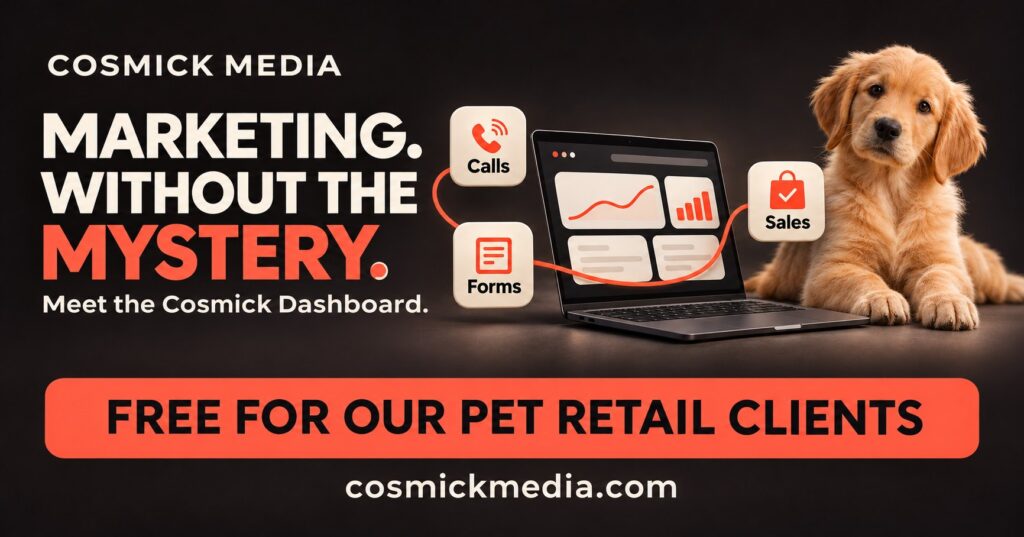
The Cosmick Dashboard brings connected marketing, calls, forms, sales, and store information into one place. We developed it specifically around our pet retail clients and the decisions they need to make.
Calls
New and returning callers, missed and short calls, calls outside business hours, and recorded missed callers who still have not been reached.
Forms
Form submissions separated from distinct submitters and repeat submissions, so 100 leads means what you think it means.
Sales
Sales records, recorded costs and margins, breed performance, inventory, days listed, and sales by team member from UKM, WooCommerce and Petkey.
Advertising
Imported ad spend by campaign, search term, location and device, right next to inquiries, matched purchases and recorded sales.
Touchpoints
Matched calls, forms and purchases shown as one journey, with common contact paths, repeat interactions and time to purchase.
Budget planner
Compare spending scenarios before a decision is made, without the planner changing the live Google Ads account.
And we’re making it available to all our pet retail clients for free. Dashboard access is included at no additional charge.
I’m proud of what our team built. I’m just as proud that we’re putting it into our clients’ hands as part of how we give back.
The mystery of what a lead is actually worth
“You received 100 leads this month” sounds like good news. But it leaves a lot unanswered.
Were those 100 different people? Did some call more than once? Did someone submit a form and then call because they were waiting for an answer? How many eventually bought something?
Those details change what the number means.
The dashboard separates form submissions from distinct submitters and repeat submissions. It shows new and returning callers. Where the records can be matched, it connects earlier calls and forms with later purchases.
Now an owner can start looking beyond activity. They can see which recorded inquiries connected to buyers, how many contacts happened along the way, and how long the purchase took.
A repeat call might be a customer getting closer to a decision. It might also be someone struggling to get help. Either way, counting it as another brand new opportunity does not tell the owner enough.
The customer journey deserves more than one line in a report
Think about how a family might actually buy a puppy.
They find the store, look at a few puppies, and send an inquiry. They call with questions the following day. They talk it over at home, come back to the website, and eventually visit the store.
That is one customer making one decision over several interactions.
When each system only shows its own piece, the journey is easy to lose. The form looks like one lead. The phone call looks like another. The purchase sits in a sales report with no obvious connection to either.
Our Touchpoints reporting brings matched calls, forms, and purchases together. It shows common contact paths, repeat interactions, time to purchase, and the roles recorded sources played at the beginning, middle, and end of those journeys.
That matters when you’re deciding where to invest. A source that introduced someone to your business may deserve attention even if another source appears on their final recorded contact.
There is an honest limit here. We can only connect what the available records support. A matched journey does not reveal every anonymous website visit, every conversation at home, or prove that one ad caused a purchase. Website traffic provides separate context.
But being able to see the recorded path is a meaningful improvement over staring at three unrelated totals and guessing.
The mystery of whether your money is going to the right place
A low cost per lead can look great until you realize those leads rarely become customers.
A more expensive inquiry may be valuable if it consistently connects to stronger sales. You need enough information to tell the difference.
The dashboard puts imported advertising spend alongside inquiries, matched purchase activity, and recorded sales. It also gives us ways to examine campaigns, search terms, locations, devices, and where the advertising money went.
That helps us have a more useful conversation with an owner. Which campaigns are showing up in matched purchase journeys? Where are inquiries coming from? Is a problem related to the advertising, or is something happening after the customer reaches out?
We also built a budget planner so different spending scenarios can be compared before a decision is made. An owner can review what shifting a budget might look like without the planner changing the live Google Ads account.
Those scenarios are planning tools, not promises about future sales. Their value is in making the assumptions visible before someone spends the money.
Getting serious about return on investment
This is where I want to be especially clear. A store’s total revenue divided by its ad spend does not prove that advertising created every dollar of that revenue.
Existing customers, referrals, walk-ins, pricing, inventory, and the store’s own team all matter.
The dashboard gives owners different views of the relationship between spending and sales. Store revenue relative to imported ad spend is one view. Google’s reported conversion value is another. Purchases matched to earlier calls and forms provide another piece of evidence.
Those figures answer different questions. They should never be treated as interchangeable.
Revenue also does not tell you what the business kept. Recorded product costs, returns, refunds, advertising costs, and other business expenses matter when you’re evaluating profitability. A dashboard margin is only as useful as the costs behind it.
That is why bringing the information together matters so much. It gives us a better basis for reviewing return on investment, checking what is missing, and deciding what deserves a closer look.
I want an owner to understand why a number looks good. I also want them to be able to challenge it.
Carley Kuehner, CEO, Cosmick Media, Inc.
Sometimes the next opportunity is a missed call
Imagine paying to bring a potential customer to your business, missing their call, and never reaching them afterward.
Then imagine increasing the advertising budget because sales are slow.
Before asking an owner to spend more, we should understand what is happening to the opportunities already coming in.
The Calls section helps with that. It separates missed calls, short calls, and longer conversations. It shows when calls arrive, whether they come during or outside business hours, and which recorded missed callers have not yet been reached.
Where matching is available, it can also show calls connected to later buyers and whether their first call went unanswered.
That gives an owner something practical to review with the team. Perhaps the phone needs better coverage at a certain time. Perhaps the callback process needs attention. Perhaps the call was about something other than a purchase.
The numbers point us toward the right questions. Reviewing the actual situation helps us decide what to change.
There is real value in finding a customer who was already interested and making sure someone helps them.
Marketing makes more sense when you can see the store
Pet retail has its own realities. The pets available today affect what customers can buy. Pricing affects decisions. Returns change the sales picture. Different locations can share a website or an advertising account while having very different needs.
We built around those realities.
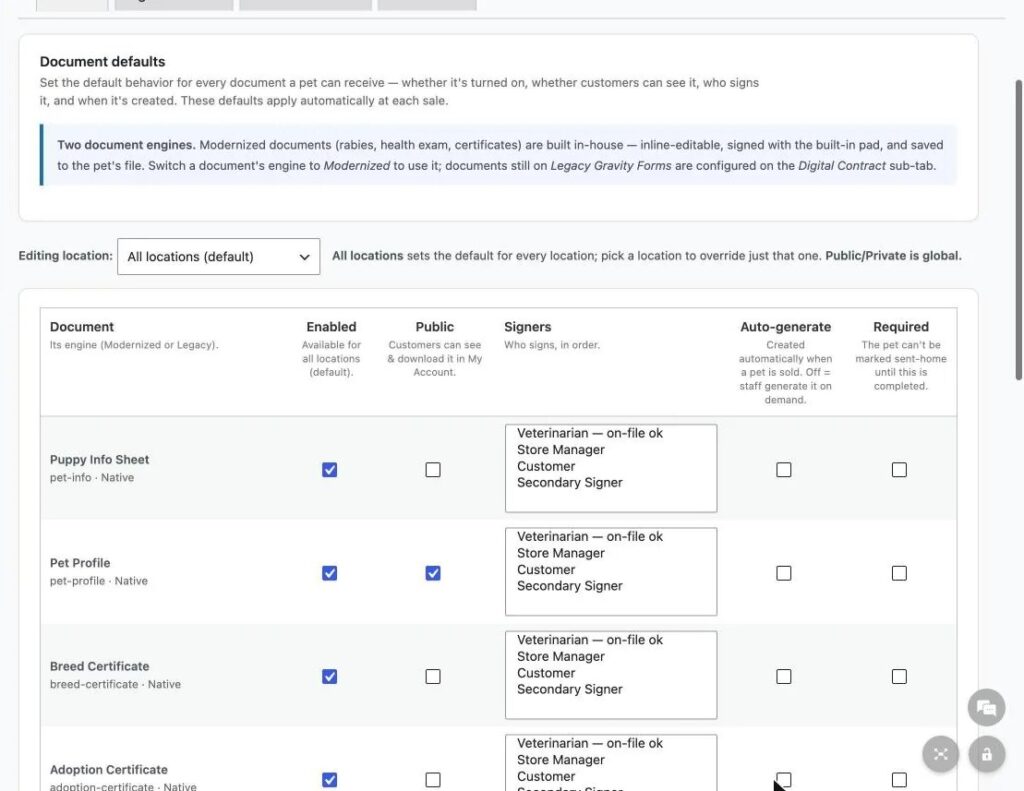
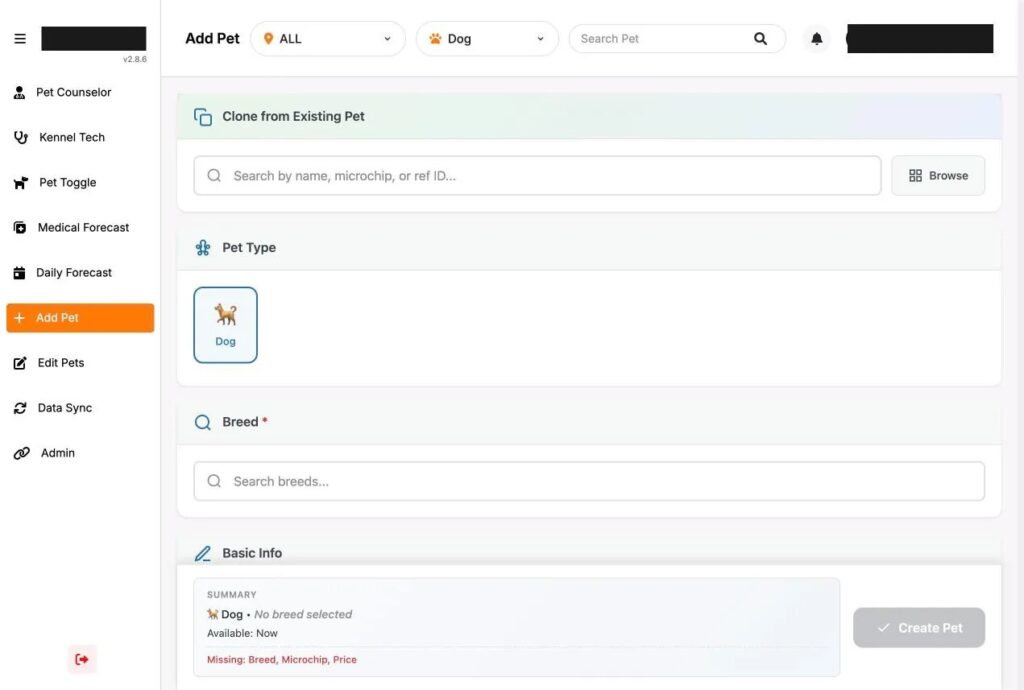
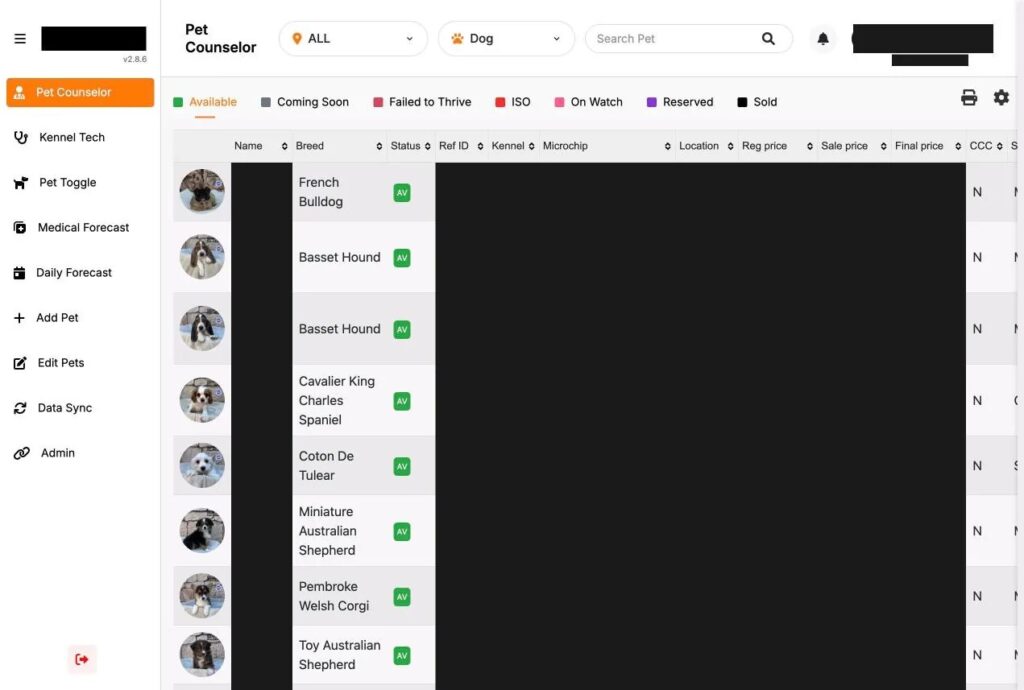
The dashboard brings in sales records, recorded costs and margins, breed performance, inventory, days listed, and sales activity by team member. It supports data from UKM and WooCommerce sites, along with Petkey sales feeds or imports.
For businesses with multiple locations, group reporting helps bring shared activity together without simply counting the same website or advertising spend once for every store.
That context helps us investigate a slow period more intelligently.
- Are inquiries down?
- Are calls going unanswered?
- Has the available inventory changed?
- Did selling prices move?
- Are returns affecting the total?
Each possibility leads to different work. An owner should be able to investigate before making a decision.
The available views depend on each store’s connected systems, settings, and data completeness. Keeping those connections current and checking the information is part of making the dashboard useful.
Why we chose to make it free for our pet retail clients
Our pet retail clients have trusted us with a meaningful part of their businesses. They have given us the opportunity to learn this industry, understand its problems, and build tools around the way their stores work.
I believe that relationship should keep becoming more valuable for them.
We invested in developing the Cosmick Dashboard. We chose to include access for our pet retail clients at no additional charge. Their existing marketing services and advertising budgets remain separate from that free dashboard access.
This is a practical way for us to give back. We can take what we have learned, put the development work behind it, and give clients something they can use to make better decisions.
It also makes us more accountable. When owners can examine the information behind our recommendations, they can ask better questions about our work. They can challenge a budget recommendation or ask why an inquiry source is getting attention.
They should be able to.
The dashboard is our own investment in that relationship. We built it around the questions our clients need answered, and we want them using it.
Your business may have a different sign out front
If you’re reading this and you own a roofing company, plumbing business, contracting company, HVAC business, or another service business, you probably recognize these same mysteries.
You pay for advertising. Calls and forms come in. Estimates go out. Some jobs get booked. Others disappear somewhere between the first inquiry and the follow-up.
Then you’re left wondering which part is working and where the money is going.
We can help you connect those pieces, too.
The questions may involve booked appointments, estimates, completed jobs, or repeat customers instead of pet sales. The work starts with understanding your business, the systems you use, and what you need to be able to see.
From there, we can connect the right information and develop reporting around your decisions. We will be clear about the scope and cost of that work before you commit.
You do not need to arrive knowing which integration or software platform you need. Start by telling us what you cannot get a straight answer to.
- Which leads turn into customers?
- What happens after someone calls?
- Where should the next advertising dollar go?
Those are business questions. Helping you answer them is our job.
Tell us what you are still trying to figure out
I’m proud that we’re changing what our pet retail clients can see about their businesses. A store owner can bring a question to the dashboard and investigate the records behind it, with our team there to help make sense of what they find.
That is the kind of progress I want Cosmick Media to keep making.
If you’re already a pet retail client, reach out and let’s make sure you have access and the right connections in place.
If you run another kind of business, tell us where the information stops making sense. We can help you work through it and build what is needed.
What is the biggest mystery in your marketing right now? And what would change if you could finally get a useful answer?
Join the conversation.
A question, a different perspective, something to add? Leave a comment. Every comment is reviewed before it appears here.
No comments yet.
Be the first to share what you think about this post.